
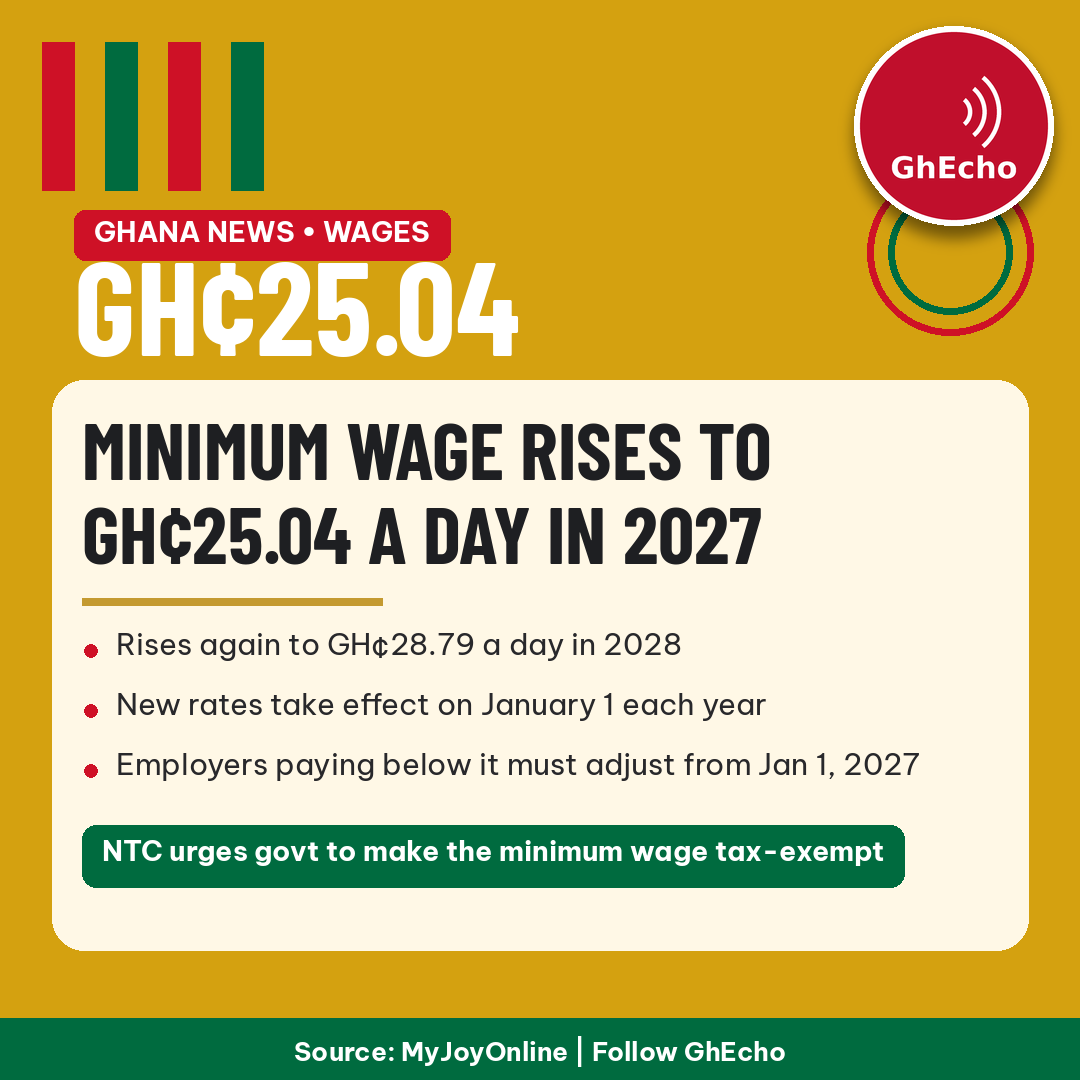
Ghana's National Daily Minimum Wage will rise to GH¢25.04 from January 1, 2027, and to GH¢28.79 from January 1, 2028, the National Tripartite Committee has agreed.
In a communiqué dated November 10, 2026, the Committee said the rates were settled after negotiations among the government, employers and organised labour. MyJoyOnline reported the decision on Tuesday.
The new rates
The GH¢25.04 rate takes effect on January 1, 2027. The GH¢28.79 rate follows a year later, on January 1, 2028.
The current national daily minimum wage, agreed by the Committee in November 2025 for the 2026 calendar year, is GH¢21.77, as reported at the time by Citi Newsroom, Graphic Online and 3News. The new 2027 figure of GH¢25.04 is an increase of about 15 per cent on that rate.
The Committee has directed all establishments, institutions and organisations whose daily minimum wages are below the new rate to adjust accordingly from January 1, 2027. It also urged employers to comply fully, MyJoyOnline reported.
A two-year framework
The Committee said it had adopted a multi-year negotiation framework to promote predictability in wage determination, help with medium-term planning and budgeting, protect workers' incomes and sustain industrial harmony.
It may still reconvene to review the agreed rates if there are material changes in key economic indicators, including inflation, exchange rates and economic growth. Any revision, it said, would be made through tripartite consultations, guided by credible economic data and reached by consensus.
Tax exemption and who signed
The National Tripartite Committee has urged the government to make the National Daily Minimum Wage tax-exempt.
The communiqué was signed by the Minister for Labour, Jobs and Employment, Emmanuel Kwadwo Agyekum; Deputy Minister for Finance, Thomas Nyarko Ampem; the President of the Ghana Employers' Association, Nana Dr Emmanuel Adu-Sarkodee Afrifie; and the Secretary-General of the Trades Union Congress, Joshua Ansah.
No separate public comments from the TUC or the Ghana Employers' Association, beyond their signatures on the agreement, had been reported in the coverage reviewed.
The Committee said the agreement reflects a commitment by government, employers and organised labour to improving workers' living standards, promoting productivity, protecting employment, sustaining business competitiveness and strengthening industrial harmony.