
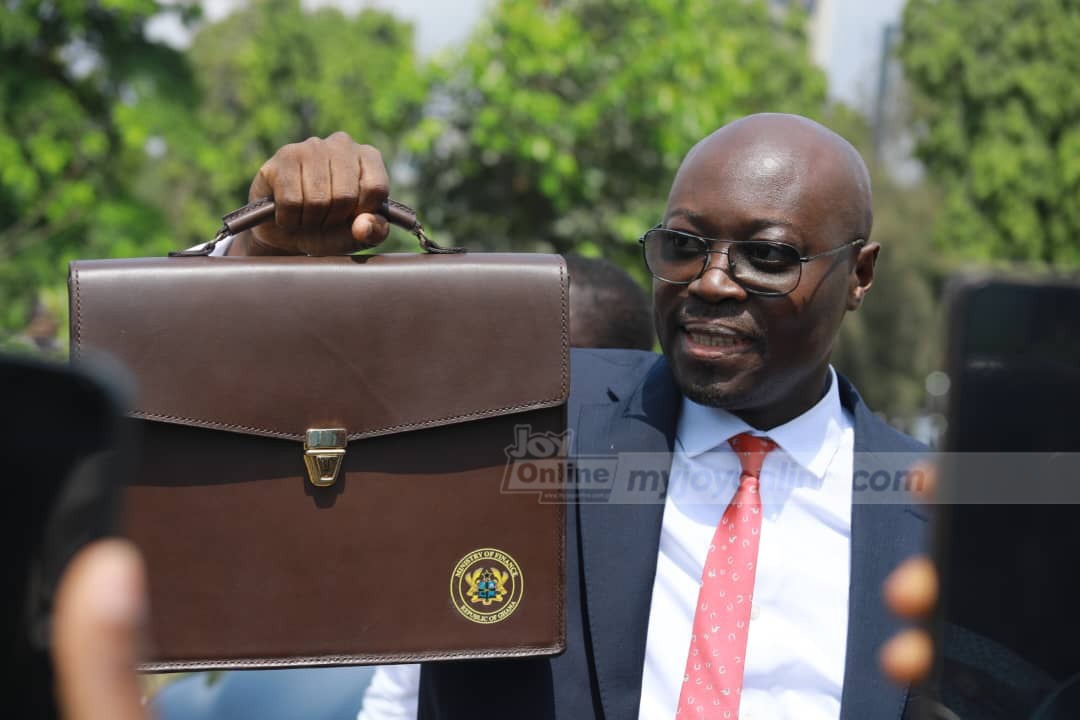
Finance Minister Dr Cassiel Ato Forson is due to present the 2027 Budget Statement and Economic Policy to Parliament at 6pm on Thursday, November 12. Speaker Alban Bagbin said on Tuesday that he had approved the minister's request for an evening sitting.
"I granted the Minister for Finance that the budget, which is to be presented on Thursday, to be presented in the evening. And he gave good reasons why he wants it to be presented in the evening," Mr Bagbin told the House, according to MyJoyOnline and 3News. He said Parliament may begin sitting around 6pm so that MPs are not already fatigued when the minister arrives. The specific reasons for the evening slot were not disclosed.
The statement is titled "The New Economy." It is expected to set out revenue targets, spending priorities and job-creation measures. The detailed figures will only be known when the minister reads the budget.
Key areas to watch
- The New Economy programme. A Ministry of Finance Fiscal Strategy Document, reported by MyJoyOnline, sets out seven pillars: macroeconomic stability; commercial agriculture, agri-industry and agribusiness; energy sector reforms and investment; critical minerals and value addition; cotton, textiles and garments; tourism, culture and the creative arts; and a pharmaceutical manufacturing hub. The document has not yet identified the specific projects, how the money would be split between those pillars, or employment targets. Those details are expected in the budget itself.
- How it will be paid for. The Fiscal Strategy Document says the government intends to commit the equivalent of 1.5 per cent of GDP a year from 2027 to 2030, which the ministry puts at approximately US$10 billion over four years. It says 0.5 per cent of GDP would come from additional revenue measures, and the rest from lowering the primary surplus target from 1.5 per cent to 0.5 per cent of GDP. Dr Forson has separately said the same financing method would support the programme without new loans, and has put the four-year envelope at least at US$13 billion, 3News reported. President John Dramani Mahama has spoken of investing over US$9 billion in job-rich sectors over the same period. The reported totals differ; the budget is expected to settle the figure.
- Borrowing. The Fiscal Strategy Document, as reported by 3News, rules out issuing Eurobonds from 2027 to 2030, with residual financing expected to come from the domestic market and capped draw-downs on existing project loans. This is the government's stated medium-term plan, not yet a budget line.
- Capital spending. Professor Robert Darko Osei, director of the Institute of Statistical, Social and Economic Research (ISSER), has urged the government to raise capital spending in the 2027 Budget. On JoyNews, he said capital expenditure missed its target by more than 40 per cent in the first half of 2026, and warned that cutting capital projects to meet fiscal targets sits uneasily with a "New Economy" push, 3News reported. Whether the budget lifts capital spending remains to be seen.
- Jobs, business costs and earlier policies. MyJoyOnline reports that business groups have called for measures to reduce the cost of doing business, improve access to credit and support agriculture and local production. The Fiscal Strategy Document still mentions the 24-Hour Economy alongside the New Economy. How the two fit together, and what results the 24-Hour Economy has delivered so far, are questions the budget is expected to address, JoyNews Research has said.
3News reported that Dr Forson briefed traditional leaders on budget priorities on Monday, and that a three-day parliamentary post-budget workshop is due in Ho from Sunday, November 15.